Finding My Footing
Notes from Menorca: Chapter 3
Reflections on regenerative farming, slow travel, and finding the hidden gifts in life's unexpected turns.
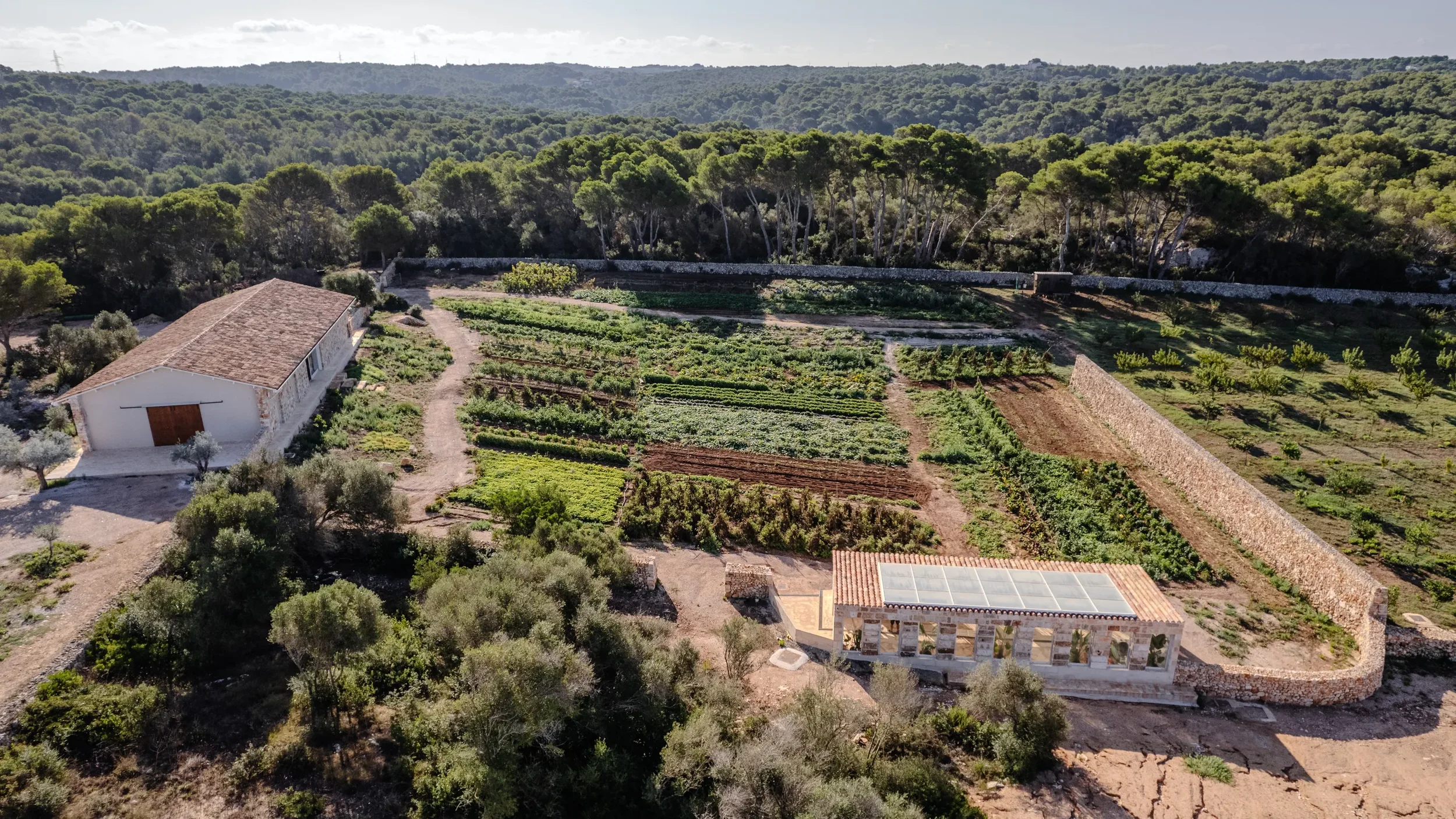
Son Blanc Farmhouse, Menorca, Spain
* * *
Sometimes the first step into a new place doesn't feel like arrival.
Sometimes it feels like disorientation—learning the language, the rhythms, the rules, and where you fit within them.
And sometimes, just when you're wondering whether you made a mistake, you find a person who helps you find your footing.
* * *
My first week at Son Blanc was challenging. So challenging, in fact, that by my seventh day, I was seriously contemplating leaving.
And yet, somehow, that same week also gave me some of my favorite memories of the entire experience.
I instantly loved the small, three-person farm team: Massimo, the head farmer, and Sarai and Jaime, both from Menorca. The farm itself was absolutely stunning, and it was hard to believe that most of it had been created in only four years, largely through Massimo's vision and hard work.
Massimo is a passionate farmer who comes from a long line of farming men in Italy. He eventually married a Menorcan woman, who inspired him to settle on the island, where they raised their three children. Sarai and Jaime, meanwhile, were born and raised in Menorca and spoke Catalan, the local language that I found surprisingly difficult to understand at first. Fortunately, Sarai also spoke fluent Spanish and English, which made communicating much easier for me.
Jaime was a young man of few words. He had spent the previous three summers volunteering on the farm before returning to the university to study computer engineering. I never quite managed to understand everything he said, but I enjoyed working alongside him nonetheless.
Of the three, Sarai quickly became my favorite.
She is only a few years older than me, but she felt like an older sister almost immediately. She was kind and thoughtful, always asking how the other WWOOFers and I were doing and genuinely interested in how we felt about the projects we were working on. She was also a deep thinker and had a habit of asking philosophical questions during our daily team breakfast.
That breakfast became my favorite time of the day.
It was an unexpected little cultural exchange that brought together people from all kinds of backgrounds. Besides the farm team, Tony and Chavi, the two maintenance guys, would often join us. Occasionally, Cat, an American student volunteer who worked in the restaurant and the farm’s "dispensary" in the barn—the room where fruits and vegetables were preserved, canned, and inventoried—would join us too.
Cat would soon become my closest friend in Menorca.
During my stay, I had two different WWOOF roommates: Petra from Austria and Nina from Australia. Each brought her own cultural perspective to our wonderfully diverse breakfast table. We shared stories, asked curious questions about one another's countries and traditions, ate delicious farm-fresh food, and laughed constantly—often because our attempts at translating between languages were absolutely terrible.
We ate farm tomatoes every single day. And the melon they grew on the farm was, without exaggeration, the most delicious melon I have ever tasted.
Those breakfasts were more than meals. They became a small daily reminder of why I had traveled all the way to Menorca in the first place: to experience something different, to learn from other people, and to find connection across cultures.
The farm team became my safe haven.
Working alongside them gave me a sense of purpose and stability during an otherwise difficult first week. I found comfort in helping care for the beautiful gardens, tending to the more than twenty chickens, and keeping an eye on the overly confident rooster I lovingly named Macho. Most importantly, I enjoyed getting to know each member of the farm team and discovering their individual personalities.
The challenges of the WWOOF experience came from somewhere else.
They came from the leadership and from the gap between what I had been told to expect before arriving and what I actually encountered—particularly when it came to our living arrangements and nutrition.
I was told that my first two weeks in Menorca coincided with some of the hottest days ever recorded, not only on the island but across Europe. The extreme heat was making international news, and people throughout Europe were experiencing heat-related illnesses.
It was intense.
Like many places in Europe, Menorca has historically not needed widespread air conditioning. Buildings were designed around a climate that, until relatively recently, was more manageable without it. But extreme heat is changing that equation.
Our accommodations were no exception.
We slept in a modern building that was primarily used as a barn on the farm side of the hotel property. Unfortunately, it had very little ventilation, and our bedroom seemed to hold onto the heat all day and all night. After sunset, the mosquitoes arrived with equal enthusiasm.
Sleeping was difficult.
Even after five hours of physically demanding farm work, I couldn't escape the heat. I would finish my shift drenched in sweat, shower, and then spend the rest of the afternoon sweating again. By nighttime, I was exhausted but unable to sleep comfortably.
And then there was the food.
It took nearly a week for the WWOOF program to provide adequate food for us to prepare our own meals at the barn. The hotel provided one meal a day to staff, but the kitchen wasn't equipped to meet the nutritional needs of vegan and vegetarian volunteers—particularly when it came to protein.
Most days, my meal consisted of a fresh vegetable salad with potatoes or quinoa and a piece of bread.
As someone doing physically demanding farm work for five hours a day, this simply wasn't enough.
I began eating a lot of eggs to make sure I was getting enough protein, even though back home I only eat eggs from chickens who are not raised or killed for meat. I didn't feel good about compromising that value, but I also knew that my body needed adequate nutrition to keep up with the work.
The combination of too little sleep and too little nutrition began to take its toll.
I was becoming weak, frustrated, and sad.
And although I loved my farm team, their shifts ended around 3 p.m., which meant that for my first several days I was completely alone after work.
I also hadn't received an orientation to the hotel or the property, so I didn't understand where I was allowed to go or what spaces I could use after my shift. Without that information, I mostly stayed at the barn.
That isolation was harder than I expected.
I had traveled all the way to another country hoping to connect with people, learn, and experience a different way of life. Instead, I found myself spending long afternoons alone in an extremely hot building, trying to figure out how to navigate a place I barely knew.
Thankfully, I wasn't completely alone.
Having another woman WWOOFer beside me made an enormous difference. We were both navigating the same unfamiliar environment, and there was something deeply comforting about having someone who didn't need an explanation for why certain things felt difficult.
We validated each other's frustrations, helped each other navigate the unwritten rules of this new place, and encouraged one another to make the most of the experience.
Together, we started exploring.
We encouraged each other to attend the free yoga and Pilates classes offered by the hotel. We wandered around the property and discovered spaces we hadn't known were available to us. We shared meals, stories, frustrations, and plenty of laughter.
Little by little, the world around us began to feel less unfamiliar.
Eventually, our conversations turned toward something bigger than simply getting through the day.
We were the first WWOOFers at Son Blanc, and we began noticing things that could make the experience better—not just for ourselves, but for the people who would come after us.
So we sat down together and created a list of suggestions.
It wasn't written out of anger. It was written out of hope.
We wanted future WWOOFers to arrive with clearer expectations, better communication, and more opportunities to connect with the people and resources around them. We wanted the program to become what we had imagined when we first signed up.
Looking back, I think that was one of the most meaningful things we did during that first week.
We had every reason to simply complain about what wasn't working. Instead, we asked ourselves what could make it better.
Fortunately, there were other little moments of kindness that began to make the unfamiliar feel more manageable.
Whenever I went up to the hotel to collect my daily meal, I met members of the kitchen and hotel staff. Two women in particular, Marta and Laura, went out of their way to help me. They explained the food options, showed me where things were located—including the yoga studio and laundry room—and even gave me rides into town when I needed them.
Those small acts of kindness mattered.
Looking back, I think that's one of the things I learned during my first week in Menorca: difficult experiences are rarely made up of only difficult things.
There can be beauty and discomfort living side by side.
There can be people who make you feel at home while the circumstances around you make you question whether you should stay.
And sometimes, the very people who have nothing to do with the problems you're experiencing become the reason you find enough hope to keep going.
My first week wasn't what I expected.
But perhaps finding my footing was never supposed to mean that everything suddenly became easy.
Maybe it simply meant finding the people, places, and small moments that reminded me why I had come.
🌱 Seeds I Took Home
Trust my instincts. Feeling uncomfortable doesn't always mean I should leave, but it does mean I should pay attention to what my body and intuition are telling me.
Advocacy can be constructive. There is a difference between criticizing what isn't working and offering ideas that might help make it better.
The first person through the door has a different responsibility. Being the first WWOOFer at Son Blanc meant that some things were still being figured out. Our feedback could help shape the experience for those who came after us.
Friendship can be a form of resilience. Sharing frustrations, laughing at our mistakes, and encouraging each other to keep exploring helped transform an unfamiliar experience into something we could navigate together.
I am more adaptable than I thought. I had imagined this journey would require flexibility, but I hadn't realized how much I would learn by letting go of my expectations and figuring things out as I went.