Why I Chose to WWOOF in Spain
Notes from Menorca: Chapter 1
Reflections on regenerative farming, slow travel, and finding the hidden gifts in life's unexpected turns.
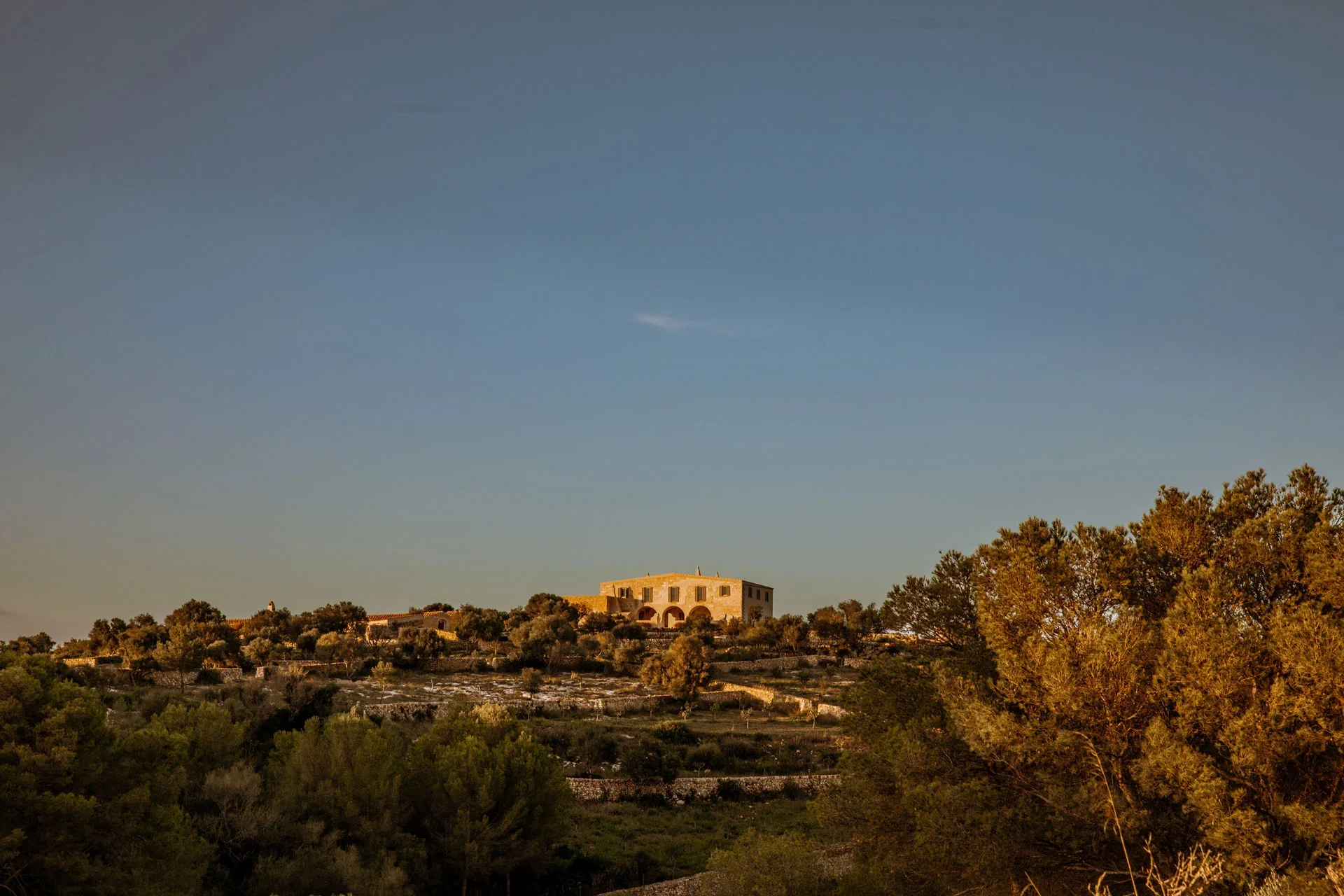
Son Blanc Farmhouse, Menorca, Spain
* * *
I've been writing these reflections while volunteering on a regenerative farm in Menorca. When I boarded the plane, I thought I was traveling to learn about regenerative agriculture. I didn't realize I was also beginning a journey into resilience, identity, hospitality, and the quiet ways that travel reshapes us.
These essays are not a guide to Menorca, nor are they a review of one particular farm. They're simply the stories of one season of my life—a season that reminded me, again and again, that there's always an advantage hidden inside every disadvantage.
If my experiences encourage you to travel more intentionally, embrace the unexpected, or find meaning in your own challenges, then they've served their purpose.
* * *
There are places we choose, and then there are places that seem to choose us.
Spain has always been one of those places for me.
Long before I knew anything about regenerative farming or WWOOFing, I knew Spain through the voice of someone I loved. Growing up, my Uncle Víctor was the first significant male figure in my life. When I was a toddler living in the Dominican Republic, he affectionately called me "mi Españolita" because I naturally pronounced my s with the soft zeta sound common in parts of Spain. It became one of those childhood nicknames that quietly stays with you, long after you've forgotten where it began.
As I grew older, however, my relationship with Spain became more complicated.
Learning about the colonization of the Taíno people and the enslavement of Africans forced me to confront difficult truths about the history that shaped my Dominican identity. For a time, I rejected my Spanish heritage altogether. I leaned deeply into exploring my African ancestry, partly because it had so often been ignored or denied within Dominican culture. I felt frustrated by the anti-Blackness that still exists in many of our communities, and embracing that part of my identity felt both necessary and healing.
Years later, through therapy, difficult conversations, and other experiences that helped me better understand myself, I began to realize something important.
Rejecting one part of my heritage wasn't actually healing me.
History deserves to be remembered honestly, but no single chapter tells the entire story of a people. Spain is more than colonization. The Dominican Republic is more than its painful past. And I am the product of many histories, all of which deserve acknowledgment without allowing any one of them to define my entire identity.
That shift in perspective changed the way I saw Spain.
Before the pandemic, my husband Eric and I began pursuing Spanish dual citizenship through his father's family. At first, it was a practical decision. We wanted the freedom to live and work in Europe if life ever led us there. As the political climate in the United States became increasingly polarized, that possibility transformed from a distant idea into a meaningful long-term goal.
Like many dreams, though, this one became romanticized.
I imagined quiet plazas, fresh produce markets, slower mornings, and a life more connected to community and nature. Spain slowly became less of a destination and more of a symbol—a place where I imagined another version of my future.
Perhaps that's why arriving in Barcelona was more jarring than I expected.
Instead of feeling welcomed, I found myself overwhelmed and discouraged after several unpleasant interactions while trying to navigate the airport. It wasn't the Spain I had imagined, and I remember wondering if I had built up this dream so much in my mind that reality could never compete with it.
Thankfully, that wasn't the end of the story.
The reason I had come to Spain wasn't tourism.
It was WWOOFing.
Back home in Florida, I coordinate educational programs at an organic farm, and within a year of working there, I met and worked with various volunteers from around the world through the WWOOF program. They came eager to learn, work with the land, and experience a different way of living. I remember thinking, Why can't I do that?
Eventually, I stopped asking why and started asking when.
Summer is our slower season at the farm, making it the perfect window to travel. I initially searched for WWOOF hosts near Barcelona, thinking it might also give me a chance to imagine what life there could someday look like.
Then I found Son Blanc.
Not in Barcelona, but on Menorca—a small Mediterranean island just a short flight away.
It wasn't the most established WWOOF host, nor was it the obvious choice. But something about it kept pulling me back. The farm's commitment to regenerative agriculture aligned beautifully with my own values, and the stunning, repurposed eco-hotel immediately captured my imagination.
It’s no secret that I love fresh food—not just cooking and eating it, but sharing it around a table with others. I also have a deep appreciation for thoughtful design, meaningful hospitality, and creating spaces where people feel welcome.
Perhaps that's why one of my biggest dreams has always been to own a sustainable bed and breakfast: a collection of tiny homes surrounding a vibrant community hub where garden-to-table meals bring people together and mindful workshops invite guests to learn, heal, and grow.
As I learned more about Son Blanc, I became fascinated by the way it sought to balance tourism with sustainability. My curiosity soon blossomed into inspiration. I found myself daydreaming about my own future bed and breakfast—a dream I had quietly tucked into the soil while I focused on building Pretty Mindful Gardens. Somehow, Son Blanc had begun watering a part of me I thought I'd set aside.
By the time I spoke with Carlota, I no longer felt like I was simply choosing a WWOOF host.
I felt like Son Blanc was calling me.
Sometimes we make decisions because they make perfect sense.
Other times, we make them because something deeper says, Go.
So I did.
What I couldn't have known then was that Menorca would challenge me in ways I never anticipated. It would test my expectations, my resilience, and my ideas about hospitality, simplicity, and what it really means to feel at home.
But those are stories for another day.
🌱 Seeds I Took Home
Sometimes the places we're most drawn to are really invitations to learn something about ourselves.
Dreams are beautiful, but reality is where transformation happens.
Traveling doesn't just introduce us to new landscapes—it introduces us to parts of ourselves we've never met before.
Thank you for joining me on this journey. I look forward to sharing more notes from gardens near and far. 🌿